
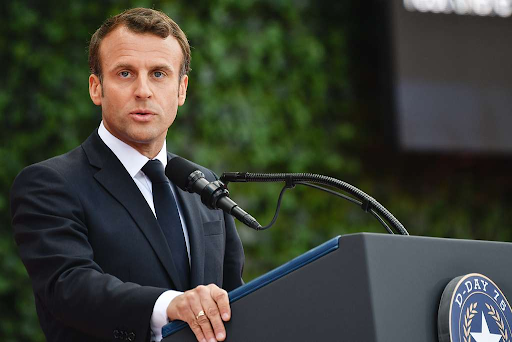
For too long, the story of AI governance has been framed as a binary: American permissiveness versus Chinese control, with Europe cast as an awkward third wheel more interested in regulation than innovation. Emmanuel Macron’s speech at the AI Impact Summit in Delhi challenged this framing directly, making the case that Europe’s approach to AI — which prioritises safety alongside innovation — is not a third option but a model worth adopting.
Macron’s argument was grounded in outcomes rather than ideology. He pointed to Europe’s continued investment in and development of AI as evidence that the EU’s AI Act has not produced the regulatory chilling effect its critics predicted. He highlighted the child safety crisis — 1.2 million children victimised by AI deepfakes in a single year, according to Unicef and Interpol — as evidence that the alternative to European-style regulation is not freedom but harm. The contrast was stark and deliberate.
His policy agenda is ambitious. Through France’s G7 presidency, Macron intends to push for internationally coordinated standards on child safety online — standards that would require platforms to take legal accountability for the content their systems produce or enable. He is also pursuing domestic legislation to ban social media for under-15s, a measure that signals political seriousness and provides a domestic template for international negotiation.
The geopolitical dimension of the debate was visible at Delhi. The Trump administration’s AI adviser renewed American criticism of European regulation, framing it as hostile to entrepreneurship. Macron’s reply — that Europe’s critics are misinformed and that safety and innovation are not mutually exclusive — was confident and evidence-backed. The support he received from António Guterres and Narendra Modi suggested that his vision of AI governance resonates beyond Europe’s borders.
What Delhi showed is that the world is looking for leadership on AI governance and that Europe, under Macron’s direction, is prepared to provide it. This is not the Europe of endless committee meetings and regulatory delay that its critics describe. It is a Europe with a clear position, an evidence base for that position and the political will to advocate for it on a global stage. The children whose safety depends on that advocacy could not afford for it to be any other way.
