
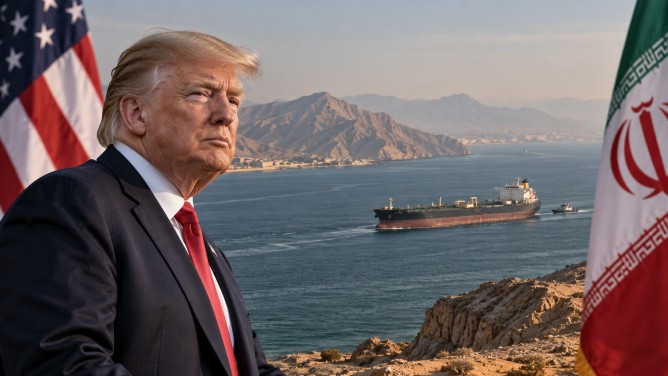
Amid ongoing tensions in the Middle East, U.S. President Donald Trump anticipates further negotiations with Iran, despite having rejected a recent proposal from Tehran concerning the Strait of Hormuz. This development follows indirect discussions between the two nations, facilitated by intermediaries during the United Nations General Assembly in New York.
The proposal, put forth by Iranian Foreign Minister Abbas Araghchi, suggested a seven-day plan to reopen the critical maritime passage, contingent upon certain conditions being met. The plan, communicated to the U.S. through Qatar, also included resuming talks on Iran’s nuclear program. However, the proposal’s conditions—which reportedly included lifting the U.S. naval blockade, easing sanctions, and releasing frozen Iranian assets—were deemed unacceptable by the Trump administration.
Despite rejecting the proposal, President Trump has signaled that further diplomatic engagement with Iran is on the horizon. These prospective talks are expected to focus on a range of issues including the status of the Strait of Hormuz, which is vital to global energy shipments, as well as sanctions, nuclear negotiations, and broader efforts to reduce regional tensions.
The Strait of Hormuz remains a significant focal point in the U.S.-Iran dispute due to its strategic importance for international energy markets. Any agreement to restore normal maritime traffic through this passage could have wide-reaching implications for regional stability and energy supplies globally.
While the exact details and timeline for the anticipated negotiations remain unclear, the continuation of diplomatic efforts underscores the complex nature of U.S.-Iran relations and the high stakes involved in reaching a potential resolution. As both nations navigate this intricate geopolitical landscape, the international community watches closely, aware of the broader impacts these discussions may yield.
