
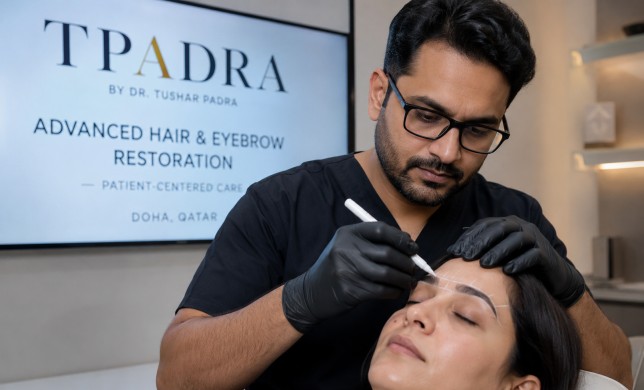
Padra has rolled out a patient-centered approach for its hair and eyebrow restoration services in Qatar, placing a strong emphasis on privacy, individualized treatment plans, informed choices, and achieving natural appearances. The framework is designed to navigate patients through the entire process – from consultation and assessment to treatment planning, recovery, and follow-up – while ensuring that personal preferences and informed consent are at the forefront.
The hair restoration services at Padra employ Follicular Unit Extraction (FUE) techniques. These treatment plans are tailored based on various factors such as the pattern of hair loss, availability of donor hair, facial features, age, hair texture, and the potential future progression of hair loss. Rather than focusing on maximizing the number of grafts, Padra aims for balanced, natural-looking results. In the case of eyebrow restoration, the framework incorporates personalized evaluations of facial proportions, eyebrow structure, hair characteristics, and patient preferences. The company’s Nano Transplant Fakhraei (NTF) technique is designed to ensure precise follicle placement, resulting in a natural eyebrow design that suits each individual.
Patient privacy is a key component of the framework, allowing individuals to control how their consultation details, medical records, photographs, and follow-up communications are managed. Padra specifies that consent for clinical documentation is handled separately from permission to use patient information for marketing or educational purposes.
Recovery planning under this framework includes detailed guidance on expected healing processes, temporary side effects, activity restrictions, and realistic timelines for returning to work and social activities. For patients traveling to Qatar for treatment, Padra offers additional support with scheduling, travel arrangements, and remote follow-up care once they return home.
Ultimately, the company describes the framework as a model for enhancing patient experience and communication. It focuses on transparency, setting realistic expectations, and providing personalized care, rather than promising specific cosmetic outcomes.
Legal Disclaimer: The information contained in this article has been provided by independent third-party contributors, clients, or content partners. We do not independently verify the accuracy, completeness, legality, ownership, licensing, or reliability of submitted content, including text, images, videos, trademarks, or other media materials. The submitting party is solely responsible for ensuring that all content, including images and media assets, complies with applicable copyright, trademark, licensing, and intellectual property laws. We disclaim liability for any unauthorized use of copyrighted or proprietary materials by third parties. If you believe that any content published on this platform infringes your intellectual property rights, kindly contact the author above for prompt review and resolution.
