
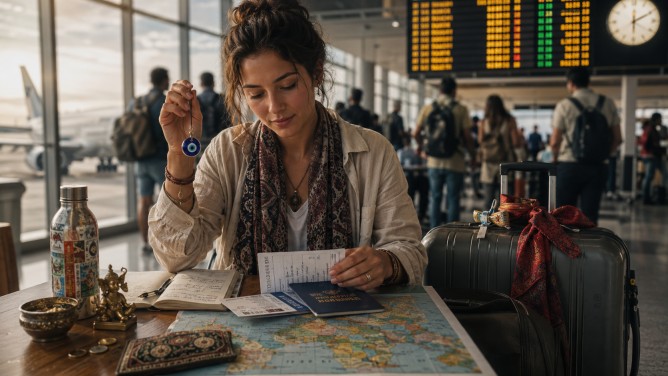
Embarking on a journey often carries with it a blend of anticipation, cultural customs, and rituals that add a special touch to the travel experience. Across the globe, people hold various superstitions aimed at ensuring safe and fortunate travels. These beliefs, deeply rooted in cultural traditions, continue to influence how individuals prepare for their trips.
In the Balkans, for instance, garlic is seen as a guardian against negative forces. Travellers might tuck a clove into their baggage, trusting in its power to ward off misfortune during their travels. Similarly, many passengers have adopted the practice of touching the aircraft’s exterior before boarding, a gesture believed to bring good luck and soothe the nerves of apprehensive flyers. Starting a journey on the right foot isn’t just a saying; for some, it’s a literal practice. Boarding a plane with the right foot first is thought to invite good fortune and set a positive tone for the trip.
In other regions, distinct customs take shape. In parts of the Middle East and the Balkans, families show their hopes for a safe journey by pouring water behind a departing traveller. This act symbolizes the wish for a smooth and secure voyage, with the expectation that the traveller will return safely. Numbers, too, hold significant influence in travel superstitions. While the number 13 is generally avoided in Western countries, China’s aversion to the number 4 stems from its phonetic resemblance to the word for death. Similarly, Italy’s unlucky number is 17. These beliefs can impact choices like hotel room numbers and building floors.
Some travellers engage in the Slavic tradition of sitting on their packed luggage for a brief moment before departing. This pause serves as a mental preparation, offering a chance to collect thoughts before embarking on their journey. Conversely, in several cultures, sweeping the floor right after someone leaves is frowned upon. Doing so is thought to sweep away the traveller’s good fortune or impact their safe return.
While these traditions lack scientific grounding, they remain an intriguing part of travel culture. For many, these rituals are cherished for their role in preserving familial customs and cultural identities, adding a layer of excitement to the adventure of travel.
