
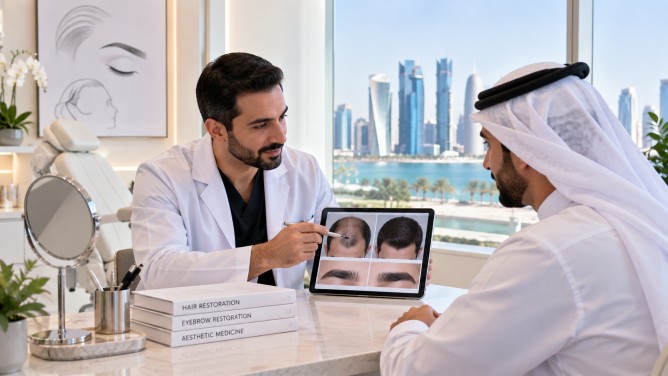
In a bid to enhance patient care for hair and eyebrow restoration services, Padra has rolled out a comprehensive new framework in Qatar. This initiative prioritizes privacy, informed decision-making, and personalized treatment strategies while striving for natural-looking outcomes. The framework is meticulously designed to support patients from the initial consultation through to recovery and follow-up, allowing them more autonomy over their treatment process and the management of their medical information.
Padra’s approach is multifaceted, taking into account not only the desired cosmetic outcomes but also a range of other critical factors. These include the patient’s medical suitability, facial features, hair type, lifestyle, and personal expectations. Privacy preferences and tolerance for visible recovery are also considered vital components in crafting a personalized treatment plan. For those contemplating hair transplants in Qatar, the planning phase involves a detailed assessment of hair loss patterns, donor-area quality, and facial proportions. The company employs Follicular Unit Extraction (FUE) for transplantation, with careful consideration given to hairline placement and graft distribution tailored to each individual’s needs.
While hair restoration is a core service, eyebrow restoration requires a different set of considerations due to the intricate nature of eyebrow design. Small changes in hair direction and density can significantly affect facial expressions. Patients are evaluated based on their existing brow structure, facial proportions, and donor-hair characteristics. Padra’s Nano Transplant Fakhraei (NTF) methodology emphasizes individual follicular selection and patient-specific brow mapping, paying close attention to the distinct growth patterns of the brow.
Padra’s framework also incorporates privacy into the consultation and treatment process, allowing patients to specify their preferences regarding communication, documentation, and the involvement of family members. The company insists that consent for clinical documentation must be distinct from permissions granted for promotional purposes. Recovery planning is another crucial aspect, as patients are informed about potential temporary effects like redness and swelling, and are advised on activity restrictions and expected recovery timelines. Padra distinguishes between medical recovery and social downtime, acknowledging that while patients may be medically cleared to resume activities, they might prefer to avoid social engagements during visible recovery stages.
As part of their patient-experience model, Padra provides ongoing follow-up support to guide patients through early aftercare, grooming, and understanding the stages of hair growth. While the framework is not a regulator-approved clinical standard, it is designed to improve patient communication and experience by focusing on privacy, personalized planning, and realistic expectations. Padra emphasizes that individual results can vary based on several factors, including donor quality and future hair loss, and they caution against viewing these procedures as guaranteed transformations.
Legal Disclaimer:
The information contained in this article has been provided by independent third-party contributors, clients, or content partners. We do not independently verify the accuracy, completeness, legality, ownership, licensing, or reliability of submitted content, including text, images, videos, trademarks, or other media materials. The submitting party is solely responsible for ensuring that all content, including images and media assets, complies with applicable copyright, trademark, licensing, and intellectual property laws. We disclaim liability for any unauthorized use of copyrighted or proprietary materials by third parties. If you believe that any content published on this platform infringes your intellectual property rights, kindly contact the author above for prompt review and resolution.
