
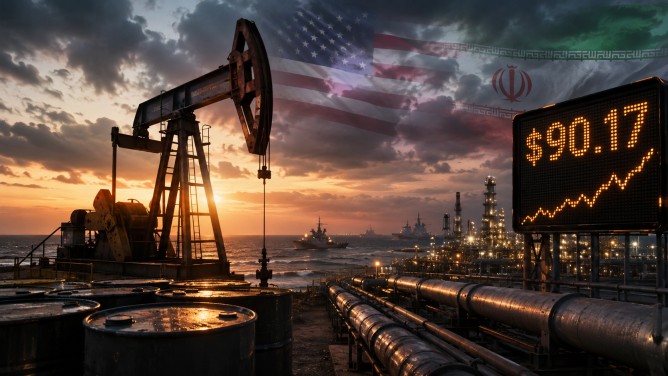
The sharp rise in oil prices is raising alarms as the timeframe for negotiations between the United States and Iran concluded without reaching a peace deal, stoking fears that continued conflict could further destabilize global energy supplies. Brent crude has surged past the $90 mark, hitting approximately $91.63 per barrel, a peak not seen since July 30. This spike follows a demand from US President Donald Trump for Iran’s surrender, coupled with his warnings of potential escalation should diplomatic efforts fail.
Concerns are mounting over the Strait of Hormuz, a pivotal maritime corridor for global oil shipments. The number of commercial vessels navigating this vital route has dropped significantly, fueling anxieties about possible long-term disruptions in oil supply chains. Iran has signaled that it might adopt a more assertive military approach if the negotiations remain fruitless. Reports of an attack on a cargo ship transiting the strait have further intensified worries regarding the safety of maritime operations in the area.
Investors are now bracing for the possibility of a prolonged disruption in oil supplies. The scenario of an extended closure or reduced traffic through the Strait of Hormuz could exert additional upward pressure on crude oil prices, compounding the economic impact. Analysts caution that ongoing tensions in the Middle East, in conjunction with the persistent conflict in Ukraine, could deliver additional shocks to global energy markets, potentially driving oil and gas prices even higher.
The global energy market is on edge as these geopolitical tensions unfold, with stakeholders closely monitoring the situation for any developments that might influence supply dynamics. The combined effect of these regional conflicts is expected to significantly impact the trajectory of energy prices, underlining the intricate link between geopolitical stability and economic outcomes in the energy sector.
